About Ron and his Workshop
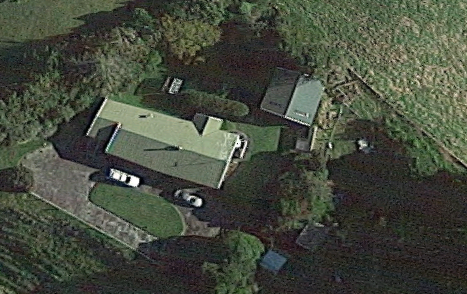
I'm Ron Segal, an engineer (CEng, Eur Ing) based in rural Upper Hutt, New Zealand. My career has covered software development, real-time systems development, technical business analysis, design methodologies, human/machine interfacing, digital circuits design and practical electronic construction in both the UK and New Zealand. Most of my work has focused on what I both excel at and enjoy: taking an awkward process-related or technical problem, working out what is really needed, and then building something practical to solve it.
A broad engineering background
I have worked across a wide and often deep combination of disciplines, including:
- software development
- real-time systems development
- structured design methods
- digital circuits design
- embedded processors and firmware
- PCB design and prototype assembly
- sensors and instrumentation
- wireless communications
- automation and system integration
- networking and Linux systems
- machine vision
- AI, speech recognition and related technologies
- 3D printing and small-scale mechanical construction
That breadth is useful because many real-world problems do not fit neatly into one discipline. A sensing problem may also require firmware, radio communications and a web interface. A machine-vision problem may need lighting, mechanical mounting, image processing and software integration. A simple monitoring device may involve electronics, enclosure design, networking and power management. I am less interested in applying a specific technology than in finding an efficient, practical way to make something useful work, often with an emphasis on innovative cost reduction.
The workshop
I work from my own electronics and prototyping workshop in Upper Hutt. It is equipped for practical development work including:
- electronic circuit development and fault-finding
- oscilloscope and bench measurement
- microscope-assisted SMD assembly and rework
- prototype PCB assembly
- soldering and reflow
- embedded-system development
- firmware and software development
- 3D printing
- small mechanical fabrication and modification
- networked test and development systems
This means I can usually take an idea from an initial experiment through to a working physical prototype, often entirely in-house.
Types of Work
I am now semi-retired and deliberately take on a limited amount of outside work. That gives me the freedom to concentrate on projects where experience, experimentation and technical judgement are genuinely useful. I am particularly interested in:
- practical ways to reduce inefficiencies
- innovative approaches to reducing technology costs
- monitoring and sensing problems
- awkward interfaces between existing equipment
- small-scale automation
- proof-of-concept development
- bespoke devices for unusual requirements
- machine-vision and AI applications
- unfinished or problematic technical projects
- occasional electronic fault-finding and repair
How I tend to work
I normally start with the problem rather than a predetermined solution. Often the first step is simply to establish whether an idea is practical. That may involve a temporary circuit, some software, a sensor, a camera, a rough mechanical arrangement or a deliberately simple, minimum viable prototype. If the basic idea works, it can then be refined into something more complete.
I generally prefer this staged approach to committing immediately to a large development project. It keeps costs and risk under control and allows both sides to decide whether further development is worthwhile. I also deliberately avoid work where a fixed delivery date is the overriding requirement. I prefer projects where a well designed cost effective outcome matters more than working to a tight schedule.
If you have an unusual technical problem, an inefficiency that ought to be resolved, or an idea that needs turning into something real, I would be interested to discuss whether and how this might be practically achieved.
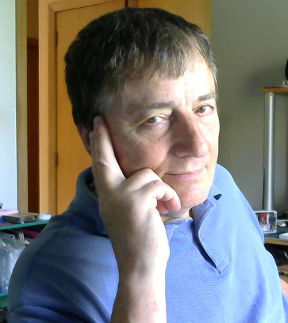
Ron Segal CEng Eur Ing
Segal Electronics